My Drifty goal #38 – Reduce my food waste and shop local – was born from two things. A MA in Food Studies from NYU and a desire to improve my relationship with food. But let’s take a step back first.
I grew up eating healthy foods. My Ukrainian grandmother plied me with healthy cereals, oatmeal, rye bread, and unsweetened tea, instilling in me a lifelong habit of skipping sugar whenever I could. That habit broke during the Pandemic. Paired with someone who did not have healthy habits (eating or otherwise), I found myself eating things I never had before. Ice cream before bed and unhealthy takeout became the norm. Somewhere, my relationship with food fractured into two paths: an interest in how those relationships with food were built, and, finally, eating everything I had always “missed out on”. That metaphorical “fork” in the road (pun intended) led to good and not-so-good places.
The Bad
A bigger and more flexible plate (sometimes to a fault) led to some weight gain, but mostly the freedom to eat things I had formerly considered “poison”. Sugary cereals, milkshakes, and sandwiches, which I had always avoided like the plague, became welcomed additions to my diet. But I still struggled. Before opening up my plate, I followed a very restricted (and unhealthy) diet. I saw anything that was considered to be dessert that came through a straw as a “gateway drug to fat” (those were my actual thoughts at the time… problematic for a lot of reasons). I also never ate condiments, especially mayonnaise or salad dressing. I operated from a scarcity mindset, believing it would keep me thin and “healthy”. It wasn’t until I got to graduate school that I realized how toxic those thoughts were.
The Good
I decided to become a Food Studies major (dual in MSLIS) because stories and relationships with food across cultures fascinated me. I found many kindred spirits at NYU who shared the same passion for the art and anthropology of our eating habits. I was a featured presenter at Yale, I completed a fellowship with the Carl Safina Center, and I took coursework in seafood, nutrition, and the history of cookbooks. I credit NYU with a better understanding of how food “completes” us, how it can be our best friend or our worst enemy, and how many people struggle to exist in the grey area between the two. I was one of those people for a long time.
My coursework led to a major aha moment: food wasn’t the enemy. In fact, it could have something with so much more meaning, whether comfort, solace, or nutrition. I started to minimize meat (you can’t read some of the things I’ve read about butchering animals, meat production, and come out of that wanting meat), especially red meat, and allow myself to have controlled portions of “bad” foods: the same sugary cereal, ice cream, etc. I thought I was doing great: I was at a healthy weight, made decent eating choices (by my own standards), and still had the occasional treat.
What I didn’t factor in: how much my commuting and city lifestyle were masking my unhealthy eating.

While living in both New York and Philadelphia, I explored new cuisines and dishes, from high-brow to fast food.
Easily hitting 7,000-10,000 steps a day while traveling from Philadelphia to New York, I hid the same scarcity mindset that was creeping back into my life behind exercise, heavy coursework, and long work hours. I countered with the occasional banana pudding from Magnolia Cupcake or a pint of ice cream, proof that I was eating a “normal” diet. But I wasn’t. When I met my now-husband, he noticed that most days, I skipped breakfast and lunch, unintentional casualties of my schedule.
Then came my “nighttime” medication.
I talked to my doctor about a recurring issue with getting sleep. Even with all the exercise I got in from commuting into the city, I found myself restless at bedtime. For a while, I relied on “the nightcap” – a quick glass of red wine at the local bar before getting into bed. When my doctor pressed for more information about my habits, she recoiled at the thought of alcohol being used as a sedative.
“This will kill you,” she told me. “Alcohol is like drinking poison.”
Not fully convinced, I chose red wine as the focus of one of my nutrition papers. I took a deep dive into the “heart-healthy” benefits of drinking a glass of red wine and found them to be mostly fictional, propped up by various organizations that profit from the narrative. After a few months of my doctor making the recommendation, I decided to go cold turkey on alcohol. At that time, my doctor prescribed a mild sedative to help me sleep and reset my nighttime habits. After trying one that made me feel like a zombie, I was finally put on a medication that made me feel normal, but would noticeably make me tired around 30-40 minutes after taking it.
A side effect, however, that wasn’t fully disclosed? Massive weight gain.
In June of last year, I waved the first red flag. I had gained 15 lbs since starting the drug. “I’m having my vow renewal in August,” I told my doctor. “I’m starting to worry it’s not going to fit.”
It, of course, was a gorgeous, sleeveless dress found in a fashion enthusiast’s attic in London. The woman, who collected sample wedding dresses and had only one size from a few designer labels, had sold me the embroidered gown nearly a year earlier. It fit when I purchased it, even a little big. Then, while working with the former seamstress of the Russian ballet, who now lives in my hometown of Wilmington, I shared my fears.
“I’m gaining weight,” I told her at a fitting. “I don’t know what to do.”
“Avoid salt for a few weeks,” she told me at the last and final dress fitting. “You won’t bloat.”
When I got married, I was teetering near my all-time high for weight. At the last minute, I added extra “puffy” sleeves to my dress, covering my upper arms, which have always been a source of insecurity for me. My sister had thought to bring them at the last minute. In my wedding photos, I (thankfully) look healthy.
I thought that was the end of the weight problem. It was only the start.
For the next few months, I occasionally contacted my doctor about the weight gain. “I’ve gained three more pounds,” I’d write. “Will this stop soon?”
“I’m almost ten pounds heavier than last August,” I’d write again. “I’m getting really scared.”
When I surpassed my all-time high by almost ten pounds, I reached my limit.
“I can’t do this anymore,” I told my husband. “I’m terrified.”
On the advice of my therapist, I started tracking my calories. I was aghast to realize that 1) I was eating way more than I thought, and 2) I was not hitting the same nutritional markers I was so mindful and watchful of when it came to my family.
Calorie-counting became a religious practice. But it wasn’t only to shed the weight. I was low across the board of some of the most vital nutritional markers: fiber, protein, Vitamin A, and Vitamin C. The water intake that my husband was always concerned about? Valid. I was lucky if I drank 16 ounces of water a day. Instead, I relied on coffee and unsweetened iced tea, both of which dehydrated me. I had been in that drinking pattern (coffee and unsweet tea rather than water) for decades.
None of this should have been news. I had previously tracked the nutrients for our six-year-old. I celebrated when he hit his daily protein and fiber goals. But it didn’t translate into change for my own eating. Instead, I relied on the 7,000-10,000 steps a day to “do the work for me”. When I took a hiatus from classes to focus on a new job, the benefits of the exercise vanished, along with my daily step habit. It became increasingly obvious that, whether I ate too much or too little, my eating habits were unhealthy. I had to change.
I hesitate to write, “This is how my relationship with food has completely changed.” Instead, I’ll say, “This is how I continue to change my relationship with food.”
Your relationship with food is like any other: it must be maintained.
Here are all of the things I’ve learned so far:
- When it comes to your plate, the less you know, the worse. I say this with a giant grain of salt. I do not believe that you should be obsessive about food. Eating disorders can be born from a need to control the plate, avoiding anything that “scares” you. Yes, we do not live in a society that puts health first, BUT that knowledge can also set you free. Don’t aim for perfection. Aim to be knowledgeable and responsible about what goes into your body. And leave room for fun.
- Don’t fall for fads. Man, there is some REALLY bad advice out there about food. At best, it’s fearmongering. At worst, it’s a tactic to make people pay through the nose for more “nutritious” foods. Main culprits: raw milk (do NOT drink raw milk, people), things labeled as “natural” or “organic” that don’t really have any additional health benefits (yeah, turns out some of those labels mean nothing and are paid for), and food marketed as “diet-friendly”. I see a lot of TikTok ads for supplements that your body “can’t live without” and that celebrities “swear by”. If you are getting your nutrition information exclusively from content creators that profit from your naivety, please consider the next “lesson”.
- Educate yourself through the right channels. Look for your facts in studies not funded by major food distributors. Follow RDs (registered dieticians) who share content about healthy eating. Abbey Sharp is my absolute favorite internet personality – she has great takes on “hunger crushing combos” and eating healthier without being incredibly restrictive. Also, find your own dietician or nutritionist (many of them do video sessions; I’ve used ZocDoc to find my doctors).
- Fall in love with nutrition. This one is admittedly a big ask, especially if you have struggled with your relationship with food. But there is a lot of satisfaction and joy to be found in teaching yourself to better care for your body. A good starting point for me was curiosity. (I’ll discuss more in the next section.)
- Know the basics. Some things don’t have to be overcomplicated. An entire bag of chips in one or two sittings per day is not great. Sugar is added to more than you think (white bread, tomato sauce). It’s smart to check nutrition labels unless it’s driven by fear and anxiety. Drinking too much alcohol (more than 2-3 drinks a week, some argue at all) is not good. I haven’t had a drink in two years. Do I miss wine? From time to time. Do I miss how it made my body feel? No.
How I Fell In Love with Food Again
I credit a few things to my improved relationship with food:
- My education at NYU (ongoing), where I learned about the harmful components of alcohol, stereotypes, racism, as well as the gentrification and appropriation of cookbooks and cultural recipes, the ongoing issues in the seafood and meat industries, the fundamentals of nutrition, and so much more (including some great people making waves in the food world)
- My relationship with travel, which has always inspired me to venture beyond my plate into unfamiliar territory, as well as a deep appreciation for the contributions of people from our global community (chefs, farmers, food industry workers)
- My place in the world, Philadelphia, one of the most vibrant food communities (in my opinion) in the US. Also, everything I learned while living in Wilmington, NC, a coastal seaside town with a problematic history, but an optimistic future
- My hero, the legendary Anthony Bourdain, who was the ultimate foodie and anthropologist, inspiring people everywhere to broaden their plate, as well as the people making food systems better
- My curiosity, which leads me to new ingredients, new vegetables, and new cooking methods, all of which make my relationship to food richer and more nutritious with every bite
The last point is one of the biggest factors. Curiosity is my #1 piece of advice for anyone looking to eat healthier. Let your favorite foods be a roadmap: learn how to make a protein-rich macaroni and cheese or a heartier salad. Ask questions like, “How can eating breakfast be more nutritious and tasty?” “Can pasta be something besides a carb overload?” “What can I get on this menu that looks healthy and new to me?”

Visiting local grocery stores and markets has always been a favorite travel “excursion” of mine.
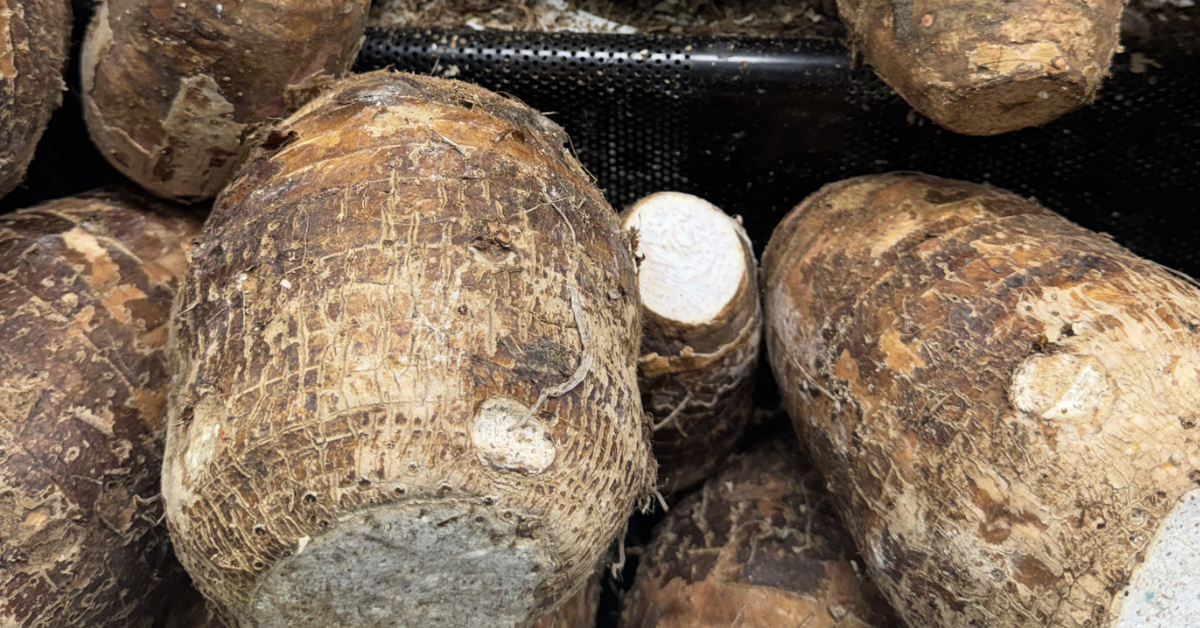
Vowing to let my curiosity guide me toward better eating, I recently had taro for the first time and absolutely fell in love with its taste. Wanting to choose a healthier option, I went for summer rolls when our office did Vietnamese takeout, and absolutely loved the lemongrass tofu inside.
I’ve also learned not to use food to punish myself. I refuse to eat a “sad salad” because I “deserve” fewer calories. I don’t use negative terms to describe food anymore. I don’t say “fat” as if it’s a bad thing.
Abbey Sharpe does reaction videos about diet trends, “what I ate in a day,” and recommendations on “hunger crushing combos,” a tactic used to avoid restrictive diets.
And I keep my opinions to myself (I’m sharing here, but feel free to ignore it). I used to share so much of what I was learning at NYU to “warn” others about bad actors in the food system, better diets, and the problems with the meat and seafood industry, etc. Because here’s the biggest truth of all of this: some people do not have the option to be particular about the food they eat or how it’s prepared.
Notable reasons I’m afforded the luxury to explore my relationship with food:
- The privileges I have benefited from since birth, which have enabled me to get an education, as well as the hard work of my parents, my mom, who always had food on the table, and my dad, who worked his ass off to make sure we always had everything we wanted
- The hard work of my husband and I to provide our child (and ourselves) the luxury of trying new foods (mostly) whenever we want, as well as my mother-in-law, who lives with us. The three of us are a dynamic team that makes it possible to raise a small human who loves to eat, snack, and try new things
- I have historically and naturally been thin, which comes with benefits of its own, such as how society sees and treats you, even loved ones and friends
I know the days I have as an “overweight” person are still days that I can be proud of, because my body is learning and growing. And on any given day, there is always someone who has it worse than you (in this case, I’m referring to access to nutritious food, as well as the time and energy to prepare it).
Some other reasons I try to keep my mouth shut about food:
- It’s not my place to tell other people how or what they should eat
- I do not know the particular challenges or struggles someone is having with their health, lifestyle, or their budget
- I have always benefited from a place of privilege when it comes to food
And last but certainly not least: I have a child who is still learning about food. The relationships we all have with food as children are delicate. I still hear the echoes of a loved one telling me that eating more salt will keep me thin and that I wasn’t allowed to eat more than one cookie because of the sugar. I feel (strongly) that kids should be allowed to explore food in a balanced, yet flexible way. That’s why I never use scary or intimidating terms to describe food in front of any child, even when discussing my own preferences.
That all being said, here are my “hot” takes: dairy is not my devil. The meat industry, while very flawed, cannot and should not disappear. Coffee, despite sustainability issues, is a cornerstone of global economies. A bowl of Fruit Loops every once in a while is fine. Skinny should not be a personality trait. Related to that, being thin (especially if you are naturally thin) does not make you an expert or superior to other people. You should not feel comfortable saying “I don’t have anything in common with fat people” out loud (for the record, more than one person has said this to me in my lifetime. I was not ‘fat’ at the time, but still found it incredibly offensive). Adopting a restrictive diet also does not make you a subject matter expert. Not every “fat” person wants or needs to lose weight. Everything is fine in moderation, and guess what? The goal should be healthier bodies, not necessarily lighter ones.
The tldr; of it. I have a background in Food Studies, but I am not a registered dietitian. Your diet is none of my business. This post just reflects my personal experience and opinions. Additionally, my comments regarding sharing diet-related expertise are not meant to demean anyone. It’s just a product of our society: we want to share what we learn with others. This post is an example of that! But as stated here, I’m not a registered medical professional. I feel it would be good if people remembered that each and every person has a unique relationship with food.
None of this is to say, “you should eat like me.” All of this is to say, “you should eat like you.”
I look forward to continuing my food journey and using those insights to inform my goal #38 – Reduce my food waste and shop local. There’s so much to learn, see, and eat.
Leave a Reply